Sealed vs Draft: Why Your Strategy Changes
The single biggest mistake players make in sealed is treating it like draft. They are fundamentally different formats, and Secrets of Strixhaven amplifies every difference.


In draft, you choose your cards. You read signals, commit to a college, and build a focused deck around your mechanic. In sealed, you open six packs and play whatever you got. You cannot draft around opus or infusion or increment — you either opened enough enablers and payoffs for a mechanic, or you did not.
Bombs matter more in sealed. In draft, the average card quality is higher because you selected every card. In sealed, your pool is random. A single bomb rare or mythic can carry games that your average commons and uncommons cannot win alone. Every college commander (rated 5.0-5.2) is a build-around in sealed. Every Emeritus mythic (4.8) is a splash consideration.
Synergy is less reliable. The college mechanics — repartee, opus, infusion, increment — all require critical mass. In draft, you can build toward critical mass by prioritizing mechanic cards. In sealed, you might open 3 opus creatures and 0 expensive spells to trigger them. When synergy does not come together, fall back on raw card quality.
Mana base is more forgiving. You see all your fixing at once. You know exactly which dual lands and colorless sources you have before you commit to colors. Splashing a third color is easier to evaluate in sealed because there is no uncertainty about future packs.
For draft-specific strategy — signal reading, pick order, and pack-by-pack decision making — see our complete SOS Draft Guide. This guide focuses entirely on sealed pool evaluation and prerelease strategy.
How to Evaluate Your Sealed Pool: Step by Step
You have 30 minutes to build your deck at the prerelease. Here is a process to use every time you open a sealed pool. It takes about 10 minutes, leaving 20 minutes for final cuts and mana base tuning.
Step 1: Sort by color. Separate every card into piles: white, blue, black, red, green, multicolor, colorless, lands. Do not think about deck building yet — just sort.
Step 2: Count playables per color. A playable is any card you would be happy to include in a 40-card deck. In SOS, any card rated 2.0 or above qualifies. Count each color pile. If a color has fewer than 8 playables, it is unlikely to be a primary color.
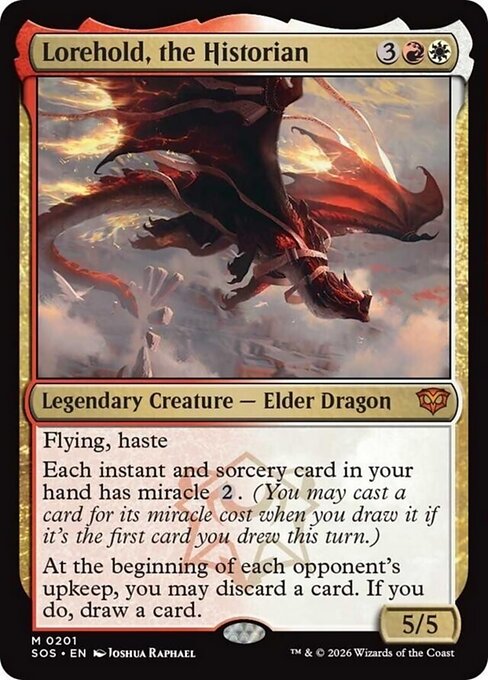
Step 3: Identify your bombs. Bombs are cards rated 4.0 or above that win the game if unanswered. SOS has 95 cards at this threshold. In six packs, you will typically open 5-6 bombs. Your bombs dictate your colors. If your best bomb is Lorehold, the Historian (5.2), you are probably playing red-white.
Step 4: Check removal depth. Count cards that destroy, exile, or deal damage to target creatures. You want at least 3-4 removal spells in your final deck. If one color has deep removal and another has none, that matters.
Step 5: Evaluate color pairs. For each two-color combination, count total playables. You need 23 non-land cards for a 40-card deck (with 17 lands). If a pair gives you 25+ playables, you have room for cuts. If it gives you exactly 23, you are locked in with no flexibility. If it gives you fewer than 20, the pair is not viable.
Step 6: Check the curve. A sealed deck needs 2-drops. If your best color pair has zero 2-mana creatures, you will lose to any deck that curves out. Count creatures at each mana cost: you want at least 3-4 two-drops, 4-5 three-drops, and 3-4 four-drops.
Step 7: Assess splash potential. If your best two colors give you 20 playables but you have a bomb in a third color, consider splashing. You need 3+ sources of the splash color to cast it reliably. Count your fixing: any dual lands, any colorless converge cards that let the splash work.
Our sealed simulator automates steps 2 and 5 with its Build Recommendations panel, which scores all 10 color pairs for your specific pool.
Color Pair Analysis: Data from 266 Cards
We analyzed all 266 draftable cards in Secrets of Strixhaven to see which color pairs are deepest. This data should inform your pool evaluation: if you are choosing between two viable pairs, pick the one with a deeper card pool.
The fundamental insight: on-college pairs are dramatically deeper than off-college pairs. SOS was designed around five two-color colleges, and the multicolor cards, signpost uncommons, and mechanical synergies are concentrated in those pairs. Off-college pairs exist but have 15-20 fewer playables.
On-college pairs (96-99 playables each):
- Prismari (UR): 99 playables, 49 creatures, 17 removal spells. The deepest removal suite of any college. Opus rewards expensive spells, and sealed pools tend to be slower than draft, which benefits Prismari.
- Witherbloom (BG): 99 playables, 52 creatures, 10 removal. The most creatures of any pair. Infusion gives you value even when your individual cards are mediocre. Average rating 3.30 — tied for highest.
- Silverquill (WB): 98 playables, 53 creatures, 14 removal. The most creatures overall and strong removal depth. Repartee requires targeting your own creatures, which means you need combat tricks or removal — check that your pool has both.
- Quandrix (UG): 98 playables, 51 creatures, 6 removal. Deep creature pool but the weakest removal of any college. If you open Quandrix with no removal, consider splashing a third color for answers.
- Lorehold (RW): 96 playables, 50 creatures, 24 removal. By far the most removal of any pair. If your pool is removal-heavy, Lorehold is your best home. The graveyard-matters theme benefits from games going long, which sealed games often do.
Off-college pairs (79-83 playables each):
- Dimir (UB): 83 playables. No college support. You are playing two colors that each want to be paired with something else. Only play Dimir if your bombs demand it.
- Azorius (WU): 81 playables. Same problem. White wants black (Silverquill) or red (Lorehold), and blue wants red (Prismari) or green (Quandrix).
- Rakdos (BR): 81 playables, but 14 removal. Serviceable if your bombs are black and red with no green or white support.
- Selesnya (WG): 79 playables. The shallowest pair in the set. Avoid unless your rares demand it.
- Gruul (RG): 79 playables. Same issue as Selesnya. Red wants white (Lorehold) and green wants blue (Quandrix).
The takeaway: in SOS sealed, you should strongly prefer an on-college pair. The 15-20 extra playables mean you have better cards to choose from, more room for cuts, and access to college-specific mechanics that off-college pairs lack.
The Five Colleges in Sealed
Each college plays differently in sealed than in draft. In draft, you can force a mechanic by prioritizing specific cards. In sealed, you either opened enough pieces or you did not. Here is how to evaluate each college from your sealed pool. For detailed card-by-card archetype analysis, see our SOS Draft Guide.
Silverquill (WB) in Sealed
Repartee needs instants and sorceries that target your own creatures. Count how many you opened. If you have 4+ repartee creatures AND 4+ targeting spells (combat tricks, auras, targeted pump), the mechanic will fire consistently. If you have repartee creatures but only 1-2 targeting spells, ignore the mechanic and build WB as a generic creature-removal deck. Silverquill has 14 removal spells in its card pool, so a removal-heavy WB build is always viable.
Prismari (UR) in Sealed
Opus triggers on instants and sorceries, with a bonus at five or more mana. Check two things: how many opus creatures did you open, and how many expensive spells? If you have 3+ opus creatures and 4+ spells at five or more mana, the archetype is online. Prismari is the greediest college and benefits most from sealed's slower pace. It also has the deepest removal (17 spells) of any college pair, so even without strong opus synergy, UR removal-control is a solid sealed plan.
Witherbloom (BG) in Sealed
Infusion needs life gain to activate. Count your life gain sources: lifelink creatures, drain effects, Pest tokens that gain life when they attack. If you have 3+ consistent life gain sources and 4+ infusion cards, the mechanic will upgrade your spells regularly. Witherbloom is the most forgiving college in sealed because even without infusion triggers, the BG card pool has the most creatures (52) and a solid average rating (3.30). A generic BG midrange deck works even when infusion does not come together.
Lorehold (RW) in Sealed
Lorehold is about graveyard exits and flashback. The key question: did you open flashback spells? Without flashback cards to fuel the graveyard-exit triggers, Lorehold is just a generic red-white deck. With 3+ flashback spells and 2+ payoffs (like Spirit Mascot growing on graveyard exits), the engine is real. Lorehold has an enormous 24 removal spells in its card pool — the most of any pair. Even without the graveyard theme, RW removal-aggro is a top-tier sealed strategy.
Quandrix (UG) in Sealed
Increment wants small creatures and larger spells cast after them. Count your increment creatures, then check if your pool has spells at varied mana costs to trigger them. The mechanic is less dependent on critical mass than other colleges — even 2-3 increment creatures grow meaningfully over a long sealed game. The concern with Quandrix is removal: only 6 removal spells in the UG pool. If your Quandrix pool lacks removal, strongly consider splashing black or red for answers.
Building Your Mana Base in Sealed
Sealed mana bases are different from draft. In draft, 17 lands is almost always right. In sealed, adjust based on your curve.
Play 18 lands when: your curve is high (4+ cards at five mana or above), you have opus payoffs that want five mana, or you have multiple splash cards requiring a third color. Sealed decks tend to be slower than draft decks, and missing your fifth land drop in a game that goes 10+ turns is devastating.
Play 17 lands when: your curve is low (aggressive Silverquill or Lorehold build), you have minimal expensive spells, and you are in exactly two colors with no splash. This is the minority of sealed pools.
Splash math: to splash a card, you need 3+ sources of the splash color. That means 2-3 basic lands of the splash type, ideally supplemented by a dual land or colorless fixer. A single basic land is NOT enough — you will draw it in only about 30% of games by turn 6. With 3 sources, that jumps to roughly 67-70%. Our Mana Base Calculator can compute exact source requirements for your specific curve.
Land distribution: count the colored mana symbols in the casting costs of your deck cards. If your deck has 15 black symbols and 10 green symbols, you want roughly 60% Swamps and 40% Forests (e.g., 11 Swamps, 7 Forests for 18 lands). Our sealed tool's land controls handle this math automatically.
Bomb Evaluation: When to Warp Your Build
In sealed, bombs are the most important cards in your pool. A bomb can single-handedly win games that your other 39 cards cannot. SOS has an unusually high density of powerful rares and mythics — 95 cards in the set are rated 4.0 or above. In six packs, you will typically open 5-6 of them.
The college commanders are the format's defining bombs. Lorehold, the Historian (5.2), Professor Dellian Fel (5.2), Quandrix, the Proof (5.1), Prismari, the Inspiration (5.0), Silverquill, the Disputant (5.0), and Witherbloom, the Balancer (5.0) are all first-pick mythics that win the game when unanswered. If you open one, you are almost certainly playing its colors.




The Paradigm mythic sorceries (Restoration Seminar, Echocasting Symposium, Decorum Dissertation, Improvisation Capstone, Germination Practicum) are all rated 4.5. Paradigm lets you recast the spell for free from exile at the beginning of each of your first main phases — in a long sealed game, that is often 3-5 free copies. These are worth splashing if your mana can support it.
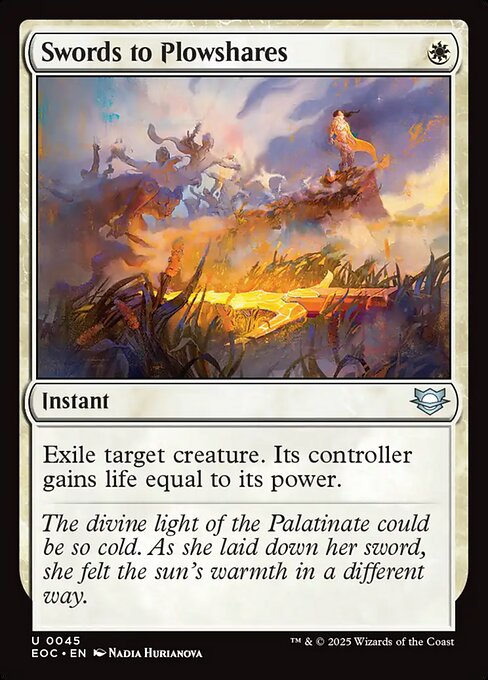
The Emeritus cycle (4.8 each) are mythic creatures that flip into classic spells: Swords to Plowshares, Lightning Bolt, Demonic Tutor, Ancestral Recall, and Regrowth. Both sides are playable in sealed, and the front face is a creature that applies board pressure. If you open one, it goes in your deck.
When NOT to warp for a bomb: if playing the bomb requires a complete color change and your non-bomb two-color pair gives you 25+ solid playables with good removal, the bomb may not be worth the mana base damage. A consistent 2-color deck beats an inconsistent 3-color deck that occasionally casts a bomb.
Mystical Archive in Sealed
Six packs means six Mystical Archive cards. Unlike draft, where you see one per pack and make quick decisions, in sealed you have all six in front of you and can plan around them.
Archive removal is premium splash material. If you opened a Lightning Bolt or Swords to Plowshares in your Archive slot but you are not in those colors, consider whether 2-3 basics of the splash color let you cast it. A one-mana removal spell with a minor splash cost is almost always worth the mana base adjustment.
Archive card advantage is worth less in sealed. Drawing three cards is powerful, but in sealed your extra draws are more likely to be mediocre cards you did not want in your deck. Archive removal directly answers your opponent's bombs, which matters more. For detailed Archive evaluation, see our SOS Draft Guide's Mystical Archive section.
Prerelease Day: Tips for April 17
Here is a process for Secrets of Strixhaven sealed events.
Practice with the sealed simulator first. Do 3-5 practice builds at scrollvault.net/tools/sealed before Saturday. This teaches you what SOS pools look like — how many playables you typically get per color, which colleges come together most often, and how the mechanics interact. Showing up cold means spending your 30-minute build time learning cards instead of making decisions.
Sort by color immediately. When you open your packs, resist the urge to read every card. Separate into color piles first. Then scan each pile for bombs, removal, and playable count. Detailed card reading comes after you have chosen your colors.
Your promo is a rare or mythic from SOS. Evaluate it as a potential bomb. If it is a college commander or Paradigm mythic, it may define your build. If it is a niche rare in colors you are not playing, it goes in the sideboard.
Sideboard aggressively in best-of-three. After game one, you know your opponent's college and game plan. Swap in targeted answers: enchantment removal against infusion-heavy Witherbloom, graveyard hate against Lorehold, cheap creatures against slow Prismari decks that need time to set up. Your sideboard is the 60+ cards from your pool that did not make the main deck — there are answers in there.
Track your time. You have 30 minutes to register and build. Spend the first 10 on the evaluation process from section 2. Spend the next 10 finalizing your 23 spells. Spend the last 10 on mana base and double-checking your curve. If you are still deciding between colors at minute 20, go with the pair that has the most removal — removal wins sealed games.
Common Sealed Mistakes
Even experienced players make these mistakes. Sealed punishes these errors harder than draft because you cannot course-correct in the next pack.
Playing three or more colors without fixing. SOS sealed pools are two-color pools with occasional splash potential. Three-color decks without dual lands or colorless fixers lose noticeably more games to mana problems. Stick to two colors unless you have real fixing.
Not enough creatures. Sealed decks often show up with 10 creatures and 13 noncreature spells. That is backward. You need 14-17 creatures to maintain board presence. Removal and tricks are only good when you have creatures to protect or clear the way for. If your pool forces you below 14 creatures, reconsider your colors.
Ignoring the mana curve. A sealed deck with no 2-drops loses to any deck that curves 2-3-4. Even if your 2-drops are mediocre commons, they trade in combat, enable repartee, and buy time for your expensive cards. A 2.0-rated 2-drop beats a 3.0-rated 5-drop when you already have five 5-drops.
Not sideboarding between games. In best-of-three sealed, sideboarding is your biggest edge. You have 60+ cards in your sideboard. If game one reveals your opponent is playing Prismari opus with expensive spells, bring in cheap aggressive creatures and tempo plays. If they are Witherbloom drain, bring in graveyard hate or enchantment removal. Many players never touch their sideboard in sealed. Do not be that player.
Building around synergy instead of power. Sealed is about card quality, not synergy. If your opus enablers are all 2.0-rated cards and your Witherbloom infusion cards are 3.0+, play Witherbloom. Do not force a weaker archetype because you like the mechanic. Sealed rewards the deck with the highest average card quality, not the most synergistic game plan.
Practice Secrets of Strixhaven Sealed for Free
We built a free SOS sealed simulator with all 266 draftable cards loaded. Open six packs, see the pack opening animation, then build your deck with AI-powered color pair recommendations.
The sealed tool includes features specifically designed for prerelease strategy:
- Color pair analysis: scores all 10 two-color combinations for your pool, ranking them by playable count, creature depth, removal, bombs, and curve quality.
- Auto-build: one click generates a 23-spell + 17-land deck in your best two colors. Use it as a starting point, then adjust.
- AI optimization (WASM): runs a Rust-based optimizer that evaluates every possible 23-card combination and suggests the strongest build.
- Visual card stacks: see your deck as overlapping card images grouped by color or mana cost, not a text list.
- Arena export: copy your deck in MTG Arena format with one click.
- Share your pool: generate a URL that encodes your entire sealed pool. Send it to a friend for a second opinion.
We recommend doing 3-5 practice builds before April 17. Each build teaches you something: which colleges come together most often, how many removal spells a typical pool has, and how to make tough cuts between playables. By the time you sit down for the prerelease, you will recognize the patterns and build faster.
Bottom Line
Secrets of Strixhaven sealed rewards preparation. The college system means your pool will usually push you toward one of five archetypes, and knowing which pair to build before you open packs saves critical time. On-college pairs have 96-99 playables each; off-college pairs have 79-83. Follow the bombs, check the removal, play enough creatures, and stay in two colors.
For draft-specific strategy, see our SOS Draft Guide. For practice, head to the sealed simulator and start building.
Tools & Guides You Might Like
Frequently Asked Questions
How do I build a sealed deck in Secrets of Strixhaven?
Sort your 84-90 cards by color. Count playables (rated 2.0+) per color. Identify bombs (4.0+) that dictate your colors. Check removal depth. Evaluate which two-color pair gives you 23+ playables with the best curve and removal. On-college pairs (Silverquill WB, Prismari UR, Witherbloom BG, Lorehold RW, Quandrix UG) have 96-99 playables each — strongly prefer these over off-college pairs.
How many colors should I play in SOS sealed?
Two colors is ideal. Splash a third color only if you have 3+ sources of the splash color (basics + dual lands) and the splash card is a bomb or premium removal. Three-color decks without fixing lose to mana problems in 30-40% of games. The on-college pairs have 96-99 playables each, so two colors almost always gives you enough cards.
How many lands should I play in SOS sealed?
17-18 lands depending on your curve. Play 18 lands if your deck has 4+ cards at five mana or above, if you have opus payoffs, or if you are splashing. Play 17 lands only for aggressive low-curve builds in exactly two colors. Missing your fifth land drop in a long sealed game is more costly than drawing one extra land.
What makes a good Secrets of Strixhaven sealed pool?
A good SOS sealed pool has: 2+ bombs (cards rated 4.0+) in the same two colors, 4+ removal spells on-color, 15+ on-color playables for a clean two-color build, and a reasonable mana curve with 3+ two-drops. Pools with a college commander (rated 5.0-5.2) are exceptional because those cards win games alone.
Can I practice Secrets of Strixhaven sealed for free?
Yes. ScrollVault's free sealed simulator at scrollvault.net/tools/sealed has all 266 draftable SOS cards loaded. Open 6 packs, get AI-powered color pair recommendations, build your deck with visual card stacks, and export to MTG Arena format. No account required. Practice before the April 17 prerelease.