The Problem: Nobody Agrees on Power Levels
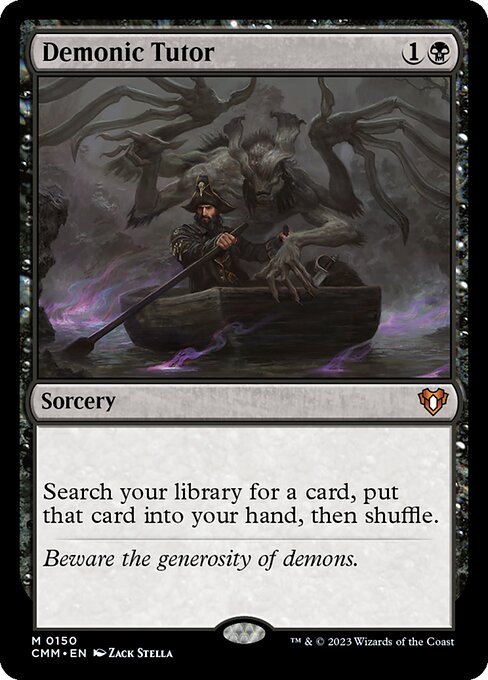
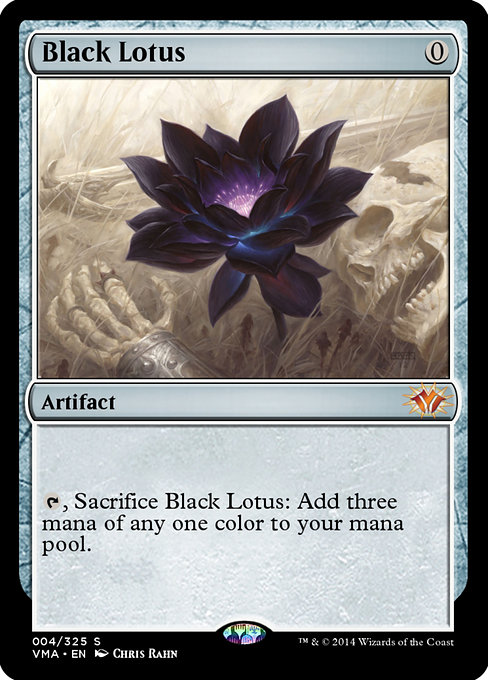
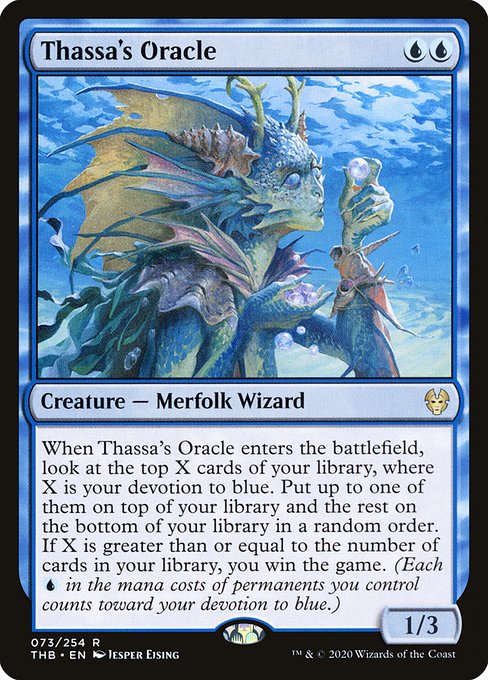
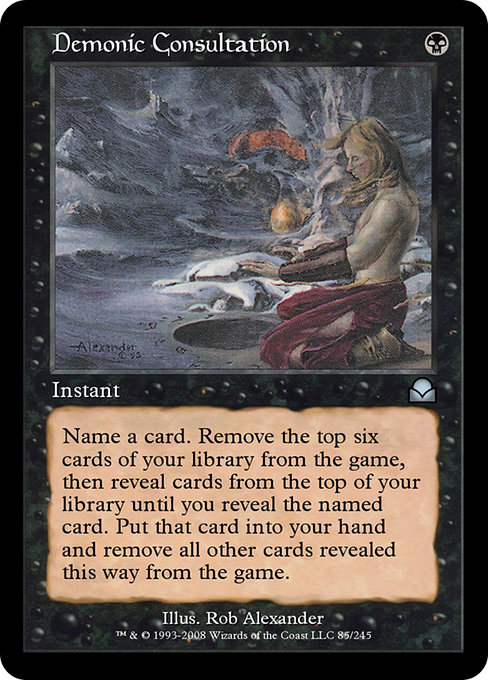
Commander tables often have all four players calling their deck a "7 out of 10" when one is an unsleeved precon and another runs Mana Vault, Demonic Tutor, and Thassa's Oracle with Demonic Consultation. Those games are miserable. The 1–10 scale does not work because everyone calibrates it differently.

When Wizards of the Coast introduced the official 5-bracket system in February 2025, we saw an opportunity: what if a tool could analyze a decklist and objectively assign a bracket? Not a guess, not a vibes check—an actual analysis of what the deck contains and what it can do. That is what we built, and this article explains exactly how it works under the hood.
Our Commander Bracket Calculator has been calibrated against 7,315 tournament decklists from Topdeck.gg and independently validated against a public, reproducible 36-deck reference set, where it achieves 100% bracket-in-range and 97.2% bracket-exact accuracy — ahead of every frontier AI model we benchmarked on the same decks. Here is how it works.
The Architecture: A Multi-Signal Pipeline
The calculator does not use a single formula. It runs your decklist through a pipeline of seven independent analysis systems, each contributing signals that get combined into a final bracket rating. The systems are:
- Commander analysis — 3-layer evaluation of your commander's power
- Card classification — categorizing every card (fast mana, tutors, interaction, removal, card draw, ramp)
- Game Changer detection — checking against the official 53-card list
- Combo detection — integrating with Commander Spellbook's API
- Synergy analysis — scoring 14 strategic axes for enabler/payoff density
- Card quality scoring — using EDHREC popularity data from Scryfall
- Soft score calculation — combining all signals into a 0–75 score with archetype modifiers
Each system can independently floor the bracket (force a minimum) or contribute to the weighted soft score. The final bracket is the maximum of all floors and the soft-score bracket.
Layer 1: Commander Analysis
Your commander is the only card guaranteed to be available every game. Some commanders are inherently more powerful than others, and the calculator needs to account for this. We built a 3-layer system that evaluates commanders from three different angles.
Lookup Table (16 Curated Profiles)
Some commanders are powerful because of what they enable in the 99, not because of their oracle text alone. Kinnan, Bonder Prodigy's text says "nonland mana sources produce extra mana" — that sounds mild until you realize it turns Sol Ring into a Black Lotus every turn. For these commanders, we manually curated speed modifiers and archetype tags:
- Kinnan, Bonder Prodigy: speed -2, combo archetype ("infinite mana into activated ability creature cheats")
- Najeela, the Blade-Blossom: speed -2, aggro+combo ("infinite combat steps with any WUBRG source")
- Urza, Lord High Artificer: speed -2, artifacts+combo ("artifact combo and infinite mana")
There are 16 commanders in this table, all chosen because their power comes from synergy with the 99 rather than their individual text.
Oracle Text Pattern Matching (19 Regex Patterns)
For commanders not in the lookup table, the calculator scans oracle text against 19 regex patterns that correspond to known power-level signals. Each pattern has a speed modifier that represents how much faster the deck can win with that ability:
- "without paying its mana cost" (speed -2) — free casting is always dangerous
- "return from graveyard to battlefield" (speed -2) — reanimation cheats mana costs
- "additional combat" (speed -1) — extra combat phases multiply damage
- "search your library" (speed -1) — tutoring increases consistency
- "cascade" (speed -1) — free spells from the top
A critical detail: if the commander costs 5 or more mana, the speed modifier is halved. An expensive commander with a powerful ability is less dangerous than a cheap one because it takes longer to deploy and costs more to recast after removal.
Keyword Combinatorial Analysis
This is the layer that catches what individual keyword analysis misses. Prowess alone is a -1 speed modifier — not scary. Double strike alone is not flagged at all. But Prowess combined with Double Strike? That is a -3, because a single pump spell now deals quadruple damage. The calculator evaluates keyword combinations, not individual keywords:
- Prowess + Double Strike: -3 (strongest spell-based commander combo)
- Infect + any evasion keyword: -2 (poison clock with guaranteed damage)
- Power 5+ and Double Strike: -2 (pure voltron threat)
- Power 4+ and Infect: -2 (near-lethal poison in two swings)
This combinatorial approach is what makes the commander analysis accurate. A commander with Flying, Lifelink, and 3 power is not dangerous. A commander with Flying, Infect, and 3 power threatens a 3-turn kill out of the command zone.
Layer 2: Card Classification and Soft Scoring
Every non-land card in the deck is classified into functional categories: fast mana, tutors, interaction, card advantage, ramp, and combo pieces. Each category contributes to a 0–75 soft score that maps to bracket thresholds.
The scoring is non-linear. Having 1–2 tutors scores 4 points; having 9+ scores 15. This captures the reality that the jump from 0 tutors to 2 matters less than the jump from 5 to 9. The thresholds were calibrated against real decks at known power levels.
Soft Score to Bracket Mapping
- 0–15 points: Bracket 1 (Exhibition)
- 16–30 points: Bracket 2 (Core)
- 31–50 points: Bracket 3 (Upgraded)
- 51–75 points: Bracket 4 (Optimized)
But the soft score alone does not determine the bracket. It is one input among many, and hard floors from Game Changers or combo detection can override it.
Layer 3: Game Changer Detection
The simplest layer: scan the decklist against the official 53-card Game Changers list. If any match is found, the deck is floored at Bracket 3. If any Game Changer is found the floor is Bracket 3 (Bracket 3 allows up to three; a fourth Game Changer exceeds that limit and sets a Bracket 4 legal floor — though such a deck often still plays at Bracket 3 power, which the calculator reports alongside the rules bracket). Zero Game Changers allows the deck to remain in Brackets 1–2.
This is the most important hard floor in the system because it directly implements WotC's bracket rules. No amount of soft-score optimization can place a deck in Bracket 2 if it contains a single Rhystic Study.
Layer 4: Combo Detection via Commander Spellbook
This is the most complex layer and the one we are most proud of. The calculator integrates with Commander Spellbook's API to detect known combos in your decklist. But raw combo detection is not enough — a 5-piece combo that requires a specific board state is very different from a 2-card instant win. The system distinguishes between them.
Combo Piece Count and Rating
Commander Spellbook rates each combo with a bracket tag: E (Exhibition), C (Core), O (Oddball), P (Powerful), S (Spicy), R (Ruthless), plus B for combos that use banned cards. The calculator uses both the piece count AND the rating to determine impact:
- 2-piece combo rated S or R: This is a compact, high-power infinite combo (like Thassa's Oracle + Demonic Consultation). It floors the deck at Bracket 4 — if the deck has the acceleration to deploy it.
- 2-piece combo rated C or O: A weaker or slower infinite combo. Floors at Bracket 3.
- 3+ piece combo rated C or E: Multi-card synergy, not a true infinite combo in most cases. Contributes to the soft score but does not force a bracket floor.
The key insight is the significant combo count: only 2-piece combos and P/S/R-rated combos count as "significant." A deck with twelve 4-piece jank combos is not the same as a deck with two compact infinite combos, and the calculator treats them differently.
Combo Acceleration Scoring
A 2-piece infinite combo in a deck with no tutors and no fast mana is not scary — you will rarely assemble it. The same combo in a deck with 6 tutors and Mana Vault is terrifying. The calculator computes an acceleration score for each S/R-rated 2-piece combo:
- Fast mana 5+ cards: +3 points
- Fast mana 3–4 cards: +2 points
- Tutors 6+ cards: +2 points
- Tutors 4–5 cards: +1 point
If the acceleration score reaches 4 or higher, the combo is confirmed as a Bracket 4 signal. Below 4, even an S/R-rated combo gets downgraded to Bracket 3 because the deck lacks the support to deploy it consistently.
This acceleration check prevents false Bracket 4 assignments. A casual deck that happens to contain two cards that go infinite should not be rated the same as a tuned combo deck that can assemble the combo by turn 4.
Layer 5: Synergy Analysis (14 Axes)
Commander decks are built around synergy, and raw card counts miss this entirely. A deck with 15 sacrifice outlets and 15 death triggers is fundamentally different from a deck with 15 random creatures and 15 random spells, even if the raw card counts are similar. The calculator evaluates synergy across 14 strategic axes:
- Sacrifice — sacrifice outlets + death trigger payoffs
- +1/+1 Counters — counter sources + counter synergies (proliferate, doubling)
- Tokens — token generators + creature count payoffs (convoke, Craterhoof effects)
- Landfall — extra land plays/fetches + landfall triggers
- ETB/Blink — flicker effects + enter-the-battlefield triggers
- Graveyard — mill/discard/self-mill + graveyard recursion
- Creature Cheat — reanimation/cheat effects + expensive creatures to cheat out
- Spellslinger — instants/sorceries + cast-trigger payoffs
- Artifacts — artifact density + artifact synergies (affinity, metalcraft)
- Enchantress — enchantment density + enchantment triggers (constellation)
- Voltron — equipment/aura count + equipped/enchanted creature payoffs
- Stax — tax/denial pieces + asymmetric cost reduction
- Lifegain — life gain sources + life gain triggers
- Wheels — wheel effects + discard/draw triggers
For each axis, the calculator counts enablers (the cards that set up the strategy) and payoffs (the cards that benefit from the strategy). The synergy score is the minimum of enablers and payoffs, because 10 sacrifice outlets with 0 death triggers equals 0 sacrifice synergy.
This balanced approach catches a common failure mode: decks that are loaded with enablers but have no payoffs (or vice versa). A deck with 8 flicker effects and 2 ETB creatures is a typical case, and the calculator correctly identifies it as fragile synergy.
Synergy-Based Bracket Overrides
Deep synergy can push a deck from Bracket 2 to Bracket 3 even without Game Changers. The calculator has three paths for this override:
- Path A: Synergy 8+ on any axis AND 6+ tutors → Bracket 3 (deep synergy plus consistency)
- Path B: Synergy 6+ AND commander speed modifier ≤ -2 AND soft score 35+ → Bracket 3 (moderate synergy plus a fast commander)
- Path C: Synergy 10+ on any axis AND soft score 30+ → Bracket 3 (extreme synergy alone)
These paths exist because some decks are clearly more powerful than Bracket 2 even without running Game Changers. A Meren deck with 12 sacrifice enablers, 10 death triggers, and 6 tutors is not a Bracket 2 deck, even if it does not contain a single card from the Game Changers list.
Layer 6: Card Quality via EDHREC Rank
Scryfall provides an EDHREC rank for every card — a measure of how popular the card is across all Commander decks on EDHREC. The calculator uses this data to score overall card quality on a 0–4 scale:
- Rank 1–100: Staple (4 points) — Sol Ring, Swords to Plowshares, Cyclonic Rift
- Rank 101–500: Premium (3 points) — competitive staples
- Rank 501–1500: Good (2 points) — solid role-players
- Rank 1501–4000: Niche (1 point) — narrow or underplayed cards
- Rank 4000+: Jank (0 points) — rarely played
The deck's average score tells a story. An Ayula, Queen Among Bears tribal deck scores 0.7/4.0 with 62% jank cards — clearly Bracket 1 territory. A Kinnan cEDH list scores 2.5/4.0 with only 4% jank — Bracket 4+. A typical precon lands around 1.4/4.0.
This scoring enables a Bracket 2 to Bracket 1 downgrade: if a deck has a soft score of 2, a popularity score under 1.0 (meaning most cards are jank or niche), and fewer than 3 stax pieces, the calculator recognizes it as a theme deck or jank build and downgrades it to Bracket 1.
Archetype Modifiers: Multiplayer Scaling
Commander is a multiplayer format, and some strategies scale with the number of opponents. The calculator applies archetype-specific modifiers to the soft score to account for this:
- Stax: 1.15x — denial effects hit all three opponents, tripling their impact
- Hatebears: 1.10x — creature-based stax, slightly less oppressive
- Storm: 1.10x — combo-heavy, faster than raw metrics suggest
- Aggro: 0.90x — the hardest strategy in multiplayer (120 total life to deal)
- Group Hug: 0.90x — intentionally low-power and political
These modifiers matter. A stax deck with a raw soft score of 28 (Bracket 2 territory) gets modified to 32, pushing it into Bracket 3. This accurately reflects that a Winter Orb affects all three opponents simultaneously — it is far more oppressive in multiplayer than its raw card power suggests.
The Final Bracket: Combining All Signals
The final bracket is computed as: max(hard floor, soft bracket, Commander Spellbook bracket). Hard floors from Game Changers and combos take priority. If no hard floor is triggered, the soft score and the Commander Spellbook data determine the bracket.
A critical safety check prevents the Commander Spellbook data from inflating brackets without local evidence. If the Commander Spellbook API rates a deck as S-tier but the local analysis shows no Game Changers, fewer than 3 significant combos, and a soft score under 50, the Commander Spellbook-derived bracket is capped at 3. This prevents false Bracket 4 assignments from decks that happen to contain combo pieces but lack the infrastructure to assemble them reliably.
Calibration: 7,315 Tournament Decks
Theory is worthless without testing. We calibrated the calculator against 7,315 real tournament decklists pulled from Topdeck.gg's tournament API. These are decks from sanctioned Commander events with 16+ players, complete with win rates and standings. We ran a 30-day window of tournament data through the calculator and correlated our bracket assignments with actual tournament performance.
What the Tournament Data Showed
The bracket distribution across 7,315 tournament decks:
- Bracket 1 (Exhibition): 243 decks — 12.7% average win rate
- Bracket 2 (Core): 176 decks — 16.7% average win rate
- Bracket 3 (Upgraded): 169 decks — 19.1% average win rate
- Bracket 4 (Optimized): 3,488 decks — 17.8% average win rate
- Bracket 5 (cEDH): 3,239 decks — 17.4% average win rate
The expected win rate in a 4-player pod is 25%. Brackets 1–2 underperform significantly (12–17%), which confirms they are lower-power decks entering higher-bracket tournaments. Brackets 3–5 cluster around 17–19%, consistent with the theory that competitive events are mostly Bracket 4–5 decks beating each other.
We also ran a threshold sensitivity analysis with 4 different soft-score configurations to find the thresholds that best predicted actual tournament outcomes. The current thresholds (15/30/50 for B1/B2/B3/B4 cutoffs) produced the highest correlation between bracket assignment and win rate gradient.
Independent Validation: A Public 36-Deck Reference Set
Beyond the tournament calibration, we validate the calculator against a public, fully reproducible reference set of 36 decks spanning every bracket: WotC-published precons (Brackets 1–3), curated Optimized lists (Bracket 4), and well-known cEDH lists (Bracket 5). Every deck’s source URL is clickable and every verdict is reproducible — append ?debug=1 to any analysis to see the full decision trace.
Results: 100% bracket-in-range, 100% within one bracket, 97.2% bracket-exact (35/36), and 100% power-in-range. We cross-validated the same 36 decks against three frontier Claude models (Sonnet 4.6, Opus 4.7, Haiku 4.5) given only the WotC framework and Game Changers list: the strongest models scored 94.4% bracket-exact, and none matched the engine’s 100% in-range or power-in-range. Full per-deck results and the model comparison are in the bracket validation methodology.
Game Changer Audit
We analyzed all 53 Game Changers for their actual tournament inclusion rates and flagged 46 non-Game-Changer cards that appeared in over 40% of winning Bracket 4+ decks. This data informs our synergy detection and soft scoring: cards that consistently appear in high-bracket tournament decks get higher EDHREC rank scores, which pushes the popularity scoring toward the correct bracket.
What the Calculator Cannot Do
No automated system is perfect. Here are the known limitations:
- Player skill. A Bracket 4 deck in the hands of a new player performs like Bracket 2. The calculator rates the deck, not the pilot.
- Novel combos. If a combo is not in Commander Spellbook's database, the calculator will not detect it. We rely on Commander Spellbook's community-maintained combo list, which is extensive but not exhaustive.
- Political strategies. Group Hug and Kingmaker strategies are hard to quantify. The calculator applies a 0.90x modifier for Group Hug, but the actual impact of "I give everyone cards and then politic for the win" is difficult to measure.
- Meta context. A Bracket 3 deck in a pod of Bracket 2 decks will feel like Bracket 4. The calculator rates absolute power, not relative matchups.
Despite these limitations, the calculator is the most reliable automated bracket tool available. Paste your Moxfield or Archidekt link into the Commander Bracket Calculator and see where your deck falls.
Related Resources
Learn more about the bracket system in our Commander Brackets Explained guide. Check the Complete Game Changers List for all 53 restricted cards. Optimize your Commander mana base with our Mana Base Calculator, which uses Monte Carlo simulation across 50,000 games.
Tools & Guides You Might Like
Frequently Asked Questions
How does the ScrollVault Commander Bracket Calculator decide a deck's bracket?
It runs your decklist through seven independent analysis systems: commander analysis, card classification (fast mana, tutors, interaction, removal, card draw, ramp), Game Changer detection, combo detection via the Commander Spellbook API, 14-axis synergy analysis, card quality scoring using EDHREC popularity from Scryfall, and a soft score that combines all signals. The final bracket is the maximum of every per-system floor and the soft-score bracket.
How accurate is the bracket calculator?
It is calibrated against 7,315 tournament decklists from Topdeck.gg and independently validated against a public 36-deck reference set, achieving 100% bracket-in-range and 97.2% bracket-exact accuracy, ahead of every frontier AI model tested (best 94.4% bracket-exact). Full per-deck results are in the validation methodology.
What is a Commander Game Changer?
Game Changers are cards on the official Wizards of the Coast list (introduced February 2025 alongside the 5-bracket system) that automatically push a deck into Bracket 3 or higher when present in sufficient quantity. The calculator detects every Game Changer in your decklist and applies the appropriate bracket floor.
Does the bracket calculator detect two-card combos?
Yes. It integrates with Commander Spellbook's API to find every two-card combo in your decklist, then applies bracket floors based on the count and tier of those combos. Significant infinite combos can floor a deck at Bracket 3 or higher even if the rest of the list is casual.
Why doesn't the 1-10 power scale work for Commander?
Because everyone calibrates it differently. Four players at the same table can each call their deck a 7 out of 10 — one with an unsleeved precon, one with Mana Vault and Thassa's Oracle plus Demonic Consultation. The 5-bracket system replaces vibes with objective criteria, and the calculator turns those criteria into an actual decklist analysis.